
Thursday 22 de October, 2026
As part of the FOVI 240187 project, undergraduate and postgraduate students from the Universidad Austral de Chile participated in a theoretical and practical workshop exploring how the plant biodiversity of southern Chile can serve as a source of scientific knowledge and open up new opportunities for veterinary research. The initiative is part of a collaboration between institutions in Chile and Argentina investigating the potential of plant extracts for the prevention and treatment of bovine mastitis.
The Valdivian Temperate Rainforest is home to an extraordinary diversity of plant species, many of which produce natural compounds whose biological potential is still being investigated. Understanding how to collect, process, and study these resources is a fundamental step toward developing new applications in animal health while promoting the responsible use of native biodiversity.
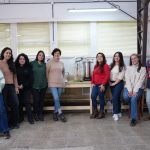
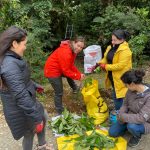
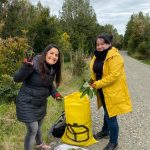
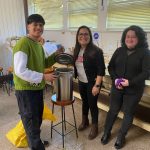
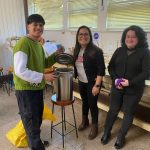
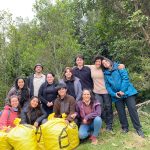
To this end, on Tuesday, October 13, Dr. Jessica Bravo, Director of the Center for Biomedical Research (CIB) at the Faculty of Medicine of Universidad Diego Portales (UDP), led the theoretical and practical workshop “Good Practices in Plant Species Collection and Essential Oil Extraction,” aimed at undergraduate and postgraduate students affiliated with the Laboratory of Applied Morphology at the Faculty of Veterinary Sciences of Universidad Austral de Chile (UACh).
The activity took place within the framework of project FOVI 240187, “Exploring the Bioactivity of Plant Extracts from the Valdivian Temperate Rainforest for the Prevention and Treatment of Bovine Mastitis: An Interdisciplinary and Collaborative Approach between Institutions in Argentina and Chile.” The initiative promotes international scientific collaboration and the exchange of expertise to investigate naturally derived alternatives for addressing diseases of veterinary importance.
During the workshop, participants explored the main scientific principles involved in collecting plant material, its proper identification and handling, and the fundamentals and procedures used to extract essential oils.
Through theoretical instruction and hands-on activities, the workshop demonstrated how decisions made during the initial stages of collection and processing can influence the chemical composition, quality, and reproducibility of the resulting extracts. These factors are essential for their subsequent biological evaluation.
Beyond learning a specific technique, the experience introduced students to a field of research that brings together botany, natural product chemistry, microbiology, and veterinary medicine.
The activity also highlighted the importance of conducting research based on scientific rigor, traceability, and the responsible use of plant resources, particularly when exploring their potential applications in biomedical and veterinary fields.
Bovine mastitis represents a major health challenge for dairy production because of its impact on animal health and welfare, milk quality, and the productivity of livestock farming systems.
In this context, studying bioactive compounds obtained from native plant species represents a promising research avenue for exploring new complementary prevention and treatment strategies. However, any potential application requires further research, progressing from chemical characterization and experimental studies to rigorous assessments of safety and efficacy.
Project FOVI 240187 brings together scientific expertise from several institutions in Chile and Argentina. The participating researchers include Dr. Javiera Bahamonde, from Universidad Austral de Chile; Dr. Flavia Bruna, from the Institute of Exper
imental Medicine and Biology of Cuyo (IMBECU-CONICET) and the National University of Cuyo, Argentina; and, from Universidad Diego Portales, Dr. Jessica Bravo and Paola Ramos.
This interdisciplinary collaboration aims to strengthen research capacity, promote knowledge exchange, and create new opportunities for cooperation in the study of natural products and their potential applications in veterinary medicine.
One of the initiative’s key contributions is the development of advanced research skills through experiences that enable students and researchers to share methodologies, build experimental competencies, and establish connections between institutions.
In this context, the workshop led by Dr. Bravo provided a practical opportunity for knowledge transfer, bringing biomedical research tools into the veterinary field and strengthening the academic networks underpinning the project.
Held as part of the closing activities of FOVI 240187, the workshop illustrates the value of scientific collaboration in addressing challenges that transcend disciplinary and geographical boundaries.
Through its participation, Universidad Diego Portales reaffirms the Center for Biomedical Research’s commitment to interdisciplinary research, the training of future generations of scientists, and the generation of knowledge that contributes to animal health. This work is guided by an integrated One Health approach, which recognizes the close relationship between human, animal, and environmental health.
From the Valdivian Temperate Rainforest to research laboratories, this collaboration demonstrates how the responsible study of native biodiversity can open up new scientific questions, strengthen international cooperation, and contribute to the development of solutions to significant health challenges in Chile and across the region.